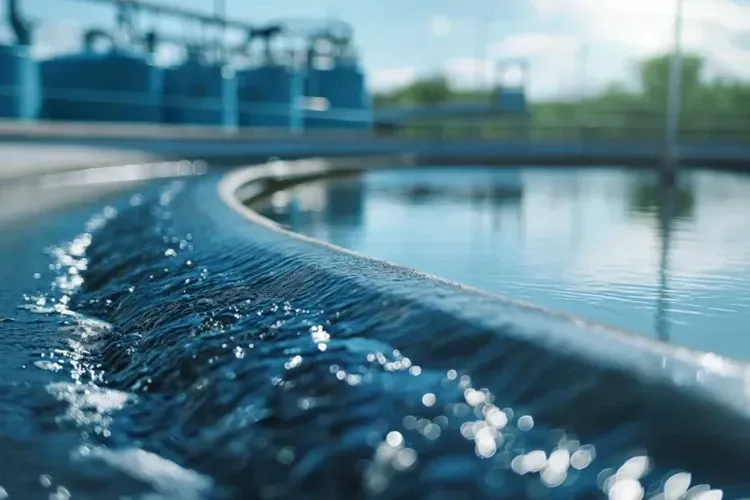
Transforming vast seawater into fresh, drinkable water is one of the modern world's most remarkable engineering achievements. At the heart of this process are highly advanced filters known as Reverse Osmosis (RO) membranes.
However, a significant obstacle stands in the way of the efficiency and sustainability of these systems. Much like a kitchen strainer clogs over time, these delicate membranes become blocked by minerals, bacteria, and other fine particles in the water. In the industry, this critical issue is known as membrane fouling.
This isn't just a minor inconvenience; it's a massive problem that can increase water production costs by up to 25%. So, what are the modern solutions being developed to combat this common challenge?
The Conventional Method: Chemical Cleaning and Its Drawbacks
Traditionally, powerful chemicals are used to clean these membranes in a process called Clean-in-Place (CIP). However, this method has serious disadvantages:
- Production Downtime: Systems must be shut down during the cleaning process, halting water production.
- High Operational Costs: The continuous purchase, storage, and handling of chemicals are expensive.
- Membrane Damage: Harsh chemicals degrade the sensitive membranes, shortening their lifespan.
- Environmental Impact: The disposal of chemical waste poses an environmental challenge.
This situation clearly highlights the urgent need for a more efficient, cost-effective, and environmentally friendly alternative for RO membrane cleaning.
The Innovative Solution: The Role of Nanobubble Technology
Nanobubble technology offers a proactive and highly effective solution to the problem of membrane fouling. This technology utilizes nanometer-sized bubbles, which are injected into the water and contain a high concentration of gas (typically oxygen or air). Nanobubbles prevent fouling through multiple mechanisms:
- The Invisible Shield: Nanobubbles create a negative charge on the membrane surface. Since foulant particles are also typically negatively charged, they are repelled from the surface, much like how two identical magnetic poles push each other away. This prevents adhesion from the start.
- The Micro-Scrubbing Effect: These tiny, continuously moving bubbles gently and constantly scrub the membrane surface, physically preventing the buildup of deposits.
- The Power of Oxidation: When nanobubbles collapse, they produce reactive radicals that oxidize and break down pollutants and biofilms, providing a natural and powerful disinfection effect.
Scientific Evidence: The Proven Success of Nanobubble Technology
The effectiveness of nanobubble technology is supported by numerous academic and industrial studies for fouling control:
Superior Performance Against Mineral Scaling: A study published in MDPI scientifically demonstrated that nanobubbles were nearly 40% more effective at preventing scale formation than the most common antiscalant chemicals.
A Breakthrough in Biofilm Control: Research on biofilm, a critical issue for the industry, revealed that nanobubbles are as effective as chemical CIP for cleaning existing contamination. More importantly, their regular use was shown to delay the onset of fouling by up to 123%. This translates to less chemical use and longer production cycles.
Proven Performance in Industrial Applications: Tests conducted on heavily fouled membranes from a real-world petrochemical plant confirmed that nanobubble-assisted cleaning is significantly more thorough and effective than the standard CIP process.
What Does This Mean for Us and Our Future?
The benefits of adopting nanobubble technology are extensive, but the most significant are:
Reduced Energy Consumption & Lower Costs: Clean membranes allow water to pass through with less resistance. This means pumps work less, leading to energy savings of up to 70% in RO systems.
Increased Water Output & Quality: With fouling under control, systems operate at peak efficiency, with observed increases in water production flow of up to 25%.
Extended Membrane Lifespan: Protecting membranes from the harsh effects of chemicals extends their operational life, safeguarding a multi-million dollar investment.
A Greener Future: By eliminating or significantly reducing the need for chemicals, this technology makes seawater desalination a more environmentally friendly and sustainable process.
In conclusion, Nanoveld delivers eco-friendly, efficient, and economical solutions for even the most demanding water purification challenges. Nanobubble technology is more than just a cleaning method; it is a smart step towards a cleaner world and a more sustainable future in water treatment.
Micro/nanobubbles (MNBs) keep the membrane surface clean by disrupting the fouling layer through physical and electrochemical mechanisms. This ensures a stable, high permeate flux for longer periods and allows the desired flow rate to be achieved with lower pressure and energy consumption.
Findings from academic studies have shown that nanobubble cleaning can produce results comparable to or better than chemical Clean-in-Place (CIP) processes. Furthermore, proactive MNB feeds have been demonstrated to significantly delay the development of fouling, thereby enhancing operational continuity.
Initial pilot applications have similarly reported a reduced need for cleaning, extended membrane lifespan, and decreased chemical consumption, all of which contribute to lower operating costs (OPEX).
All this data indicates that nanobubble technology holds immense potential as a sustainable and eco-friendly improvement strategy for energy-intensive and fouling-prone processes like Seawater Reverse Osmosis (SWRO).
Of course, as more long-term performance data is gathered from full-scale systems, the optimization and industrial adaptation of this technology will accelerate, poised to elevate the standards of efficiency in seawater desalination to a new level.